|
2. Study Outside of School
1) Time Spent Studying, Doing Homework, and Watching TV on Weekdays
In Helsinki, London, and Washington, D.C. most students responded that they spend “about 30 minutes�Eor “one hour�Estudying on weekdays, making the target study time less than one hour. In contrast one in four students in Seoul responded “more�E(more than 3.5 hours) indicating that the amount of time spent studying is remarkably high. In Beijing there is no visible trend in the length of time spent for studies. On the other hand, in Tokyo while many students responded “about 30 minutes�Eor “one hour�E the percentage of students who responded “more�Eexceeded 10%, which suggests a bipolar trend.
Graph 2-1 Time spent studying on weekdays
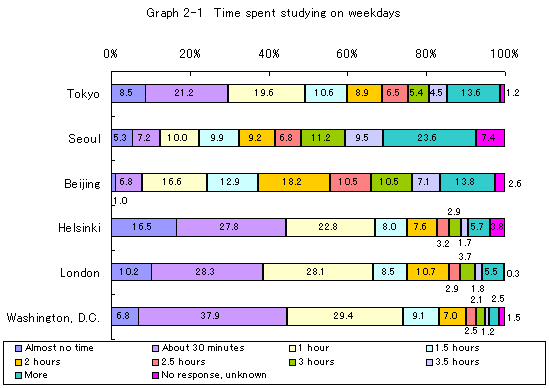
*: Includes time spent studying at study school or with a private tutor.
Graph 2-2 Time spent on homework
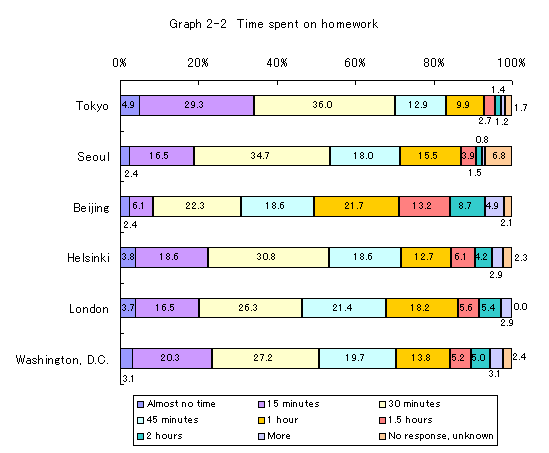
*: Of study time in Graph 2-1, time spent on school homework and other studies.
Graph 2-3 Percentage of time spent on homework which accounts for study time on weekdays
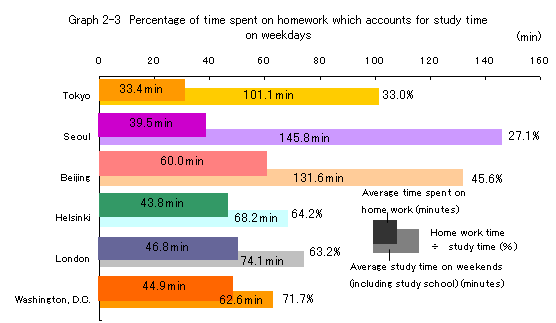
*: Recorded “almost no time�Eas 0 minutes, �E.5 hours�Eas 210 minutes, and “more�Eas 240 minutes etc., and calculated average time spent studying on weekdays excluding “no response, unknown.�ERecorded “almost no time�Eas 0 minutes, �E hours�Eas 120 minutes, and “more�Eas 150 minutes etc., and calculated average time spent on homework excluding “no response, unknown�E
Graph 2-4 Time spent watching TV on weekdays
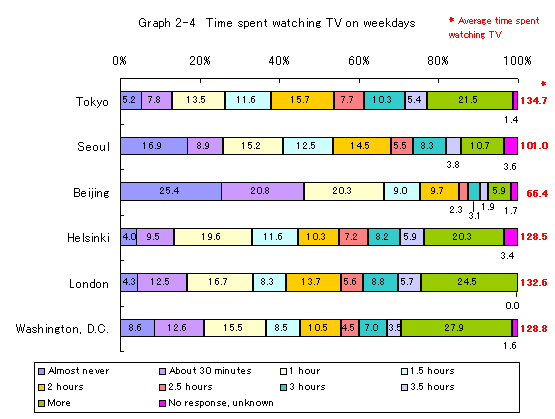
*: Recorded “almost no time�Eas 0 minutes, �E.5 hours�Eas 210 minutes, and “more�Eas 240 minutes etc., and calculated average time spent watching TV excluding “no response, unknown.�Ebr>
When asked the amount of time spent studying outside of school on weekdays the percentage of students who responded “almost no time�Ewas 16.5% in Helsinki, 10.2% in London, 8.5% in Tokyo, 6.8% in Washington, D.C., 5.3% in Seoul and 1.0% in Beijing, indicating that in all cities the majority of elementary school students spend time studying outside of school. Furthermore, the percentage of elementary school students studying for more than �E hours�E is highest in Seoul (44.3%), followed by Beijing (31.4%), Tokyo (23.5%), London (11.0%), Helsinki (10.3%), and Washington, D.C. (5.8%). On the whole it is clear that elementary school students in the three Asian cities spend many hours studying (Graph 2-1).
In all cities most students responded �E0 minutes�Efor time spent on homework. However, 48.5% of students in Beijing responded more than �E hour,�E a figure which is comparatively higher than other cities (Graph 2-2).
Graph 2-3 summarizes the average amount of time spent on studying and homework on weekdays. In the three cities in the US and Europe studying outside of school is centered on school homework while in Tokyo and Seoul many hours are spent on study other than homework. In Beijing students have a tendency to spend many hours on both homework and other study.
Looking at time spent watching TV, the percentage of students who “almost never�Ewatch TV is highest in Beijing and Seoul at 25.4%, and 16.9% respectively. Further in these cities the average time spent watching TV is between one hour and 1.5 hours, indicating that students spend much time studying and a minimum amount of time watching TV. In comparison, less than 10% of students in Tokyo, Helsinki, London and Washington, D.C. “almost never�Ewatch TV while the majority responded that they spend more than �E hours�E watching TV (Graph 2-4).
* For example, more than �E hours�Eindicates the total of the percentages for �E hours�Eand “more�E

2) Study at Home
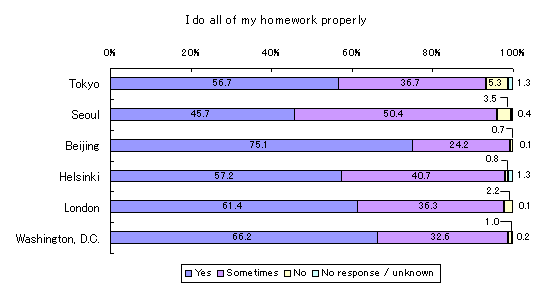
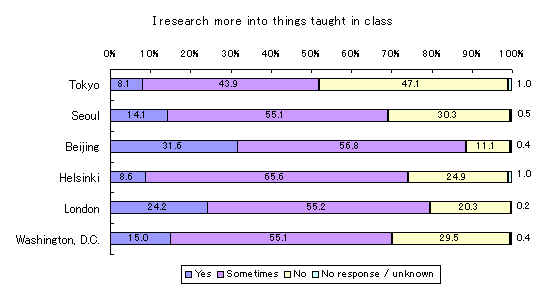
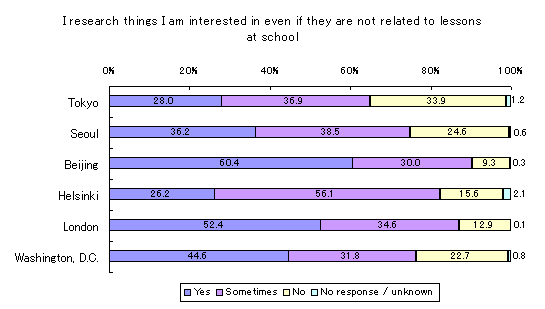
In all cities more than 90% of elementary school students responded that “I do all of my homework properly.�EIn Tokyo, the percentages of students who answered “I research more into things taught in class,�E“I review my lessons on the same day as the class,�Eand “I research things I am interested in even if they are not related to lessons at school�Ewere low compared to other cities.
Graph 2-5 Studies at home
“I do all of my homework properly.�E/span>
“I research more into things taught in class.�E/span>
“I review my lessons on the same day as class.�E/span> 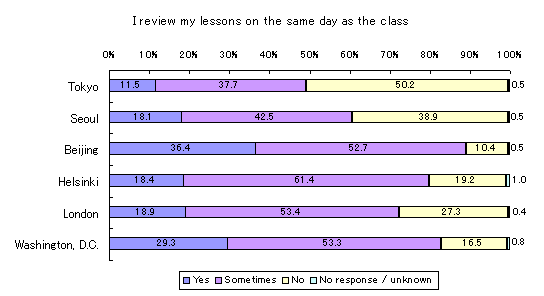
“I research things I am interested in even if they are not related to lessons at school.�E/span>
“My family does not have to remind me to study.�E/span>
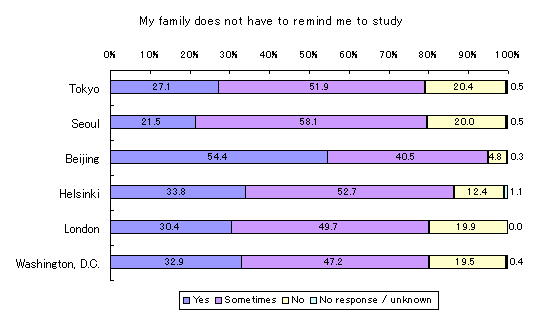
*: In Seoul “I study without having to be told to do so�E
“I think I do enough work at school and do not need to do more outside of school.�E/span>
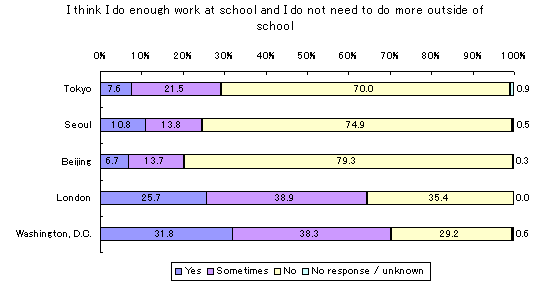
*: Equivalent question was not asked in Helsinki.
The percentage of students who responded (“yes�E+ “sometimes�E to the three statements “I research more into things taught in class,�E“I review my lessons on the same day as the class,�Eand “I research things I am interested in even if they are not related to lessons at school�Ewas highest in Beijing, indicating an eagerness to review the content of classes and to build on learning. Following Beijing, the percentages were highest in the three US and European cities (Helsinki, London, Washington, D.C.), and Seoul in sequence, and Tokyo was lowest.
The percentages of students who responded “I think I do enough work at school and do not need to do more outside of school�Eare low in the three East Asian cities (Tokyo, Seoul, Beijing) indicating that such students believe that study outside of school is also important. In contrast the response rate for students in London and Washington, D.C. was 60 to 70% indicating that students focus on study at school.
3) Study School and Outside-of-School Lessons
More than 70% of elementary school students in Seoul and Beijing attend study schools while in Tokyo more than half of elementary school students attend such schools. In comparison very few elementary school students in the three cities in the US and Europe study outside of school. The most popular outside-of-school lessons and clubs in all cities are sports and music related activities and less than 20% of students do “nothing.�E
* Available opportunities to study and learn outside of school vary among countries and cities. Consequently in this survey study school and lesson related questions were established in line with the situation in each city.
Tokyo
Graph 2-6 Attendance at study school (Tokyo)
Attendance rate
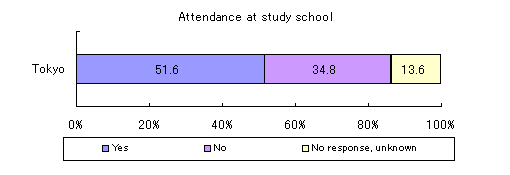
*: In the graphs below students who responded “yes�Eto attending study school have been taken to be a denominator..
Number of days attending study school (per week)
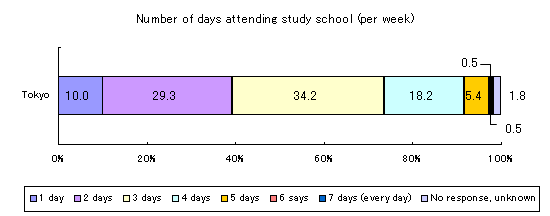
Length of time spent at study school (per session)
Graph 2-7 Outside-of-school lessons and clubs (Tokyo)
*1: Multiple responses.
*2: Including outside-of-school clubs (same in other cities).
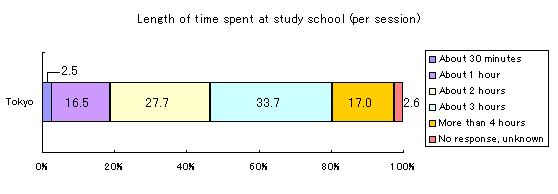
In Tokyo approximately half (51.6%) of elementary school students answered that they attend study schools. Many students attend such schools �E days�E(29.3%) or �E days�E(34.2%) a week and most attend for “about 2 hours�E(27.7%) or “about 3 hours�E(33.7%) per session (Graph 2-6).
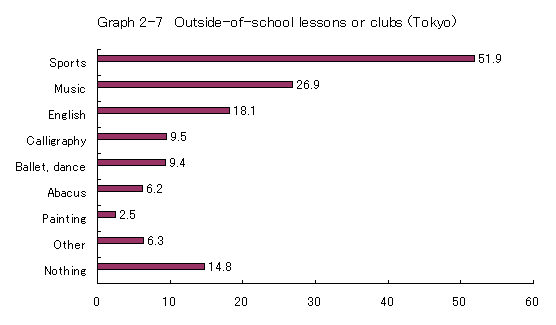
“Sports�E(51.9%) is the most popular outside-of-school activity, with more than half of all students participating in some kind of sporting activity. “Music�E(26.9%) and “English�E(18.1%) are also relatively popular (Graph 2-7).
Seoul
Graph 2-8 Attendance at study school (Seoul)
Attendance rate
*: In the graph below students who responded
“yes�Eto attending study school have been taken to be a denominator.
Number of days attending study school (per week)
Length of time spent at study school (per session)
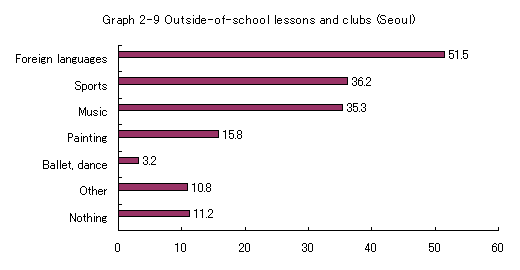
Graph 2-9 Outside-of-school lessons and clubs (Seoul)
*1: Multiple responses.
*2: Many students in Korea attend study schools due to English being compulsory for elementary school students in grade three and above. It is possible that a number of students who attend such study schools selected “foreign languages�Eas an outside-of-school lesson.
*3: Some cases, in which schools invite teachers from external organizations to use their facilities for after school activities, may be included in responses.
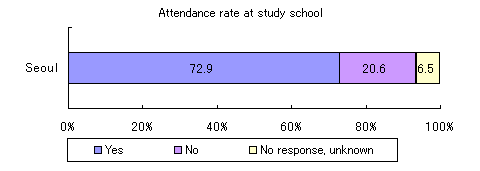
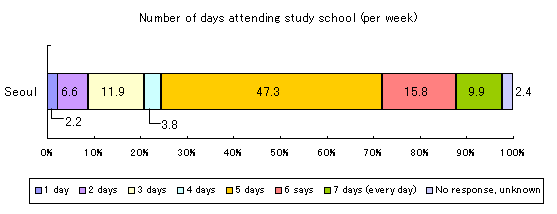
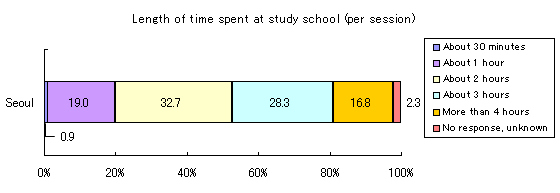
In Seoul a study school known as “Hagon,�Eand outside-of-school lessons are very popular. Three out of four students attend study schools and 73.0% of students attend such school more than �E days�Ea week*, implying that many elementary school students attend study school almost every day. Many students attend study schools for “about 2 hours�E(32.7%) or “about 3 hours�E(28.3%) per session (Graph 2-8).
The percentage of those studying “foreign languages�Eis high, exceeding 50% of all students and the second most popular outside-of-school activity is “sports�E(36.2%). However this is slightly low compared to ones in other cities (Graph 2-9).
* More than �E days�Erefers to the total of percentages for �E days�Eto �E days (every day)�E
Beijing
Graph 2-10 Attendance at study school (Beijing)
Attendance rate
*: In the graph below students who responded “yes�Eto attending study school have been taken to be a denominator.
Number of days attending study school (per week)
Length of time spent at study school (per session)
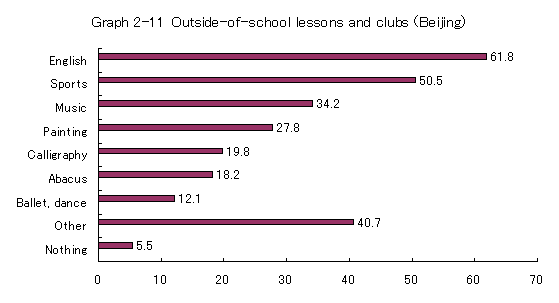
Graph 2-11 Outside-of-school lessons and clubs (Beijing)
*1: Multiple responses.
*2: Many students in China attend study schools due to English being compulsory for elementary school students in grade three and above (in Beijing in grade one and above). It is possible that a number of students who attend such study schools selected “English�Eas an outside-of-school lesson.
*3: “Other�Eincludes many study related lessons such as “Mathematical Olympiad�Eand “composition�E
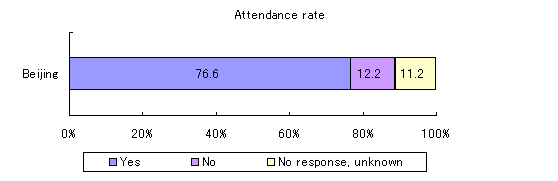
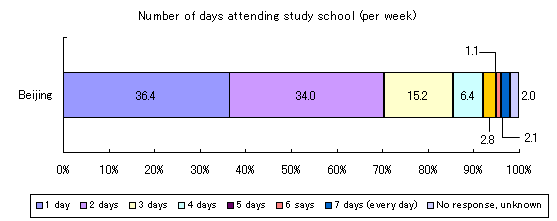
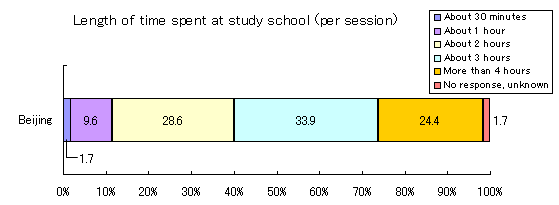
At 76.6% the percentage of elementary school students attending study schools is higher than ones in any of the other cities surveyed. Most students attended �E day�E(36.4%) or �E days�E(34.0%), however many students responded that they spend a long period of time per session at study schools: “about 3 hours�E(33.9%) and “more than 4 hours�E(24.4%) (Graph 2-10). It is conceivable that in many cases students in Beijing attend study schools on weekends on which they do not go to school.
“English�E(61.8%) is a popular outside-of-school lesson with more than 60% of elementary school students learning English outside of school. While study related outside-of-school activities are popular, “sports�E(50.5%), “music�E(34.2%), “painting�E(27.8%) are also popular (Graph 2-11).
Helsinki
Graph 2-12 Participation in study circles and clubs related to studying (Helsinki)
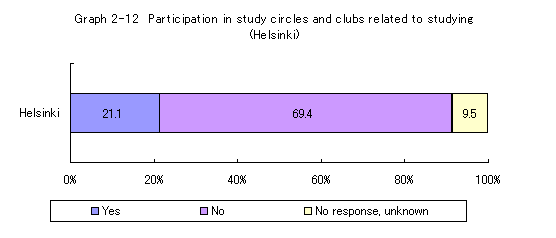
*: In Helsinki there are virtually no institutions equivalent to “study schools�Eand so students were asked whether or not they “participate in optional study circles and clubs.�Ebr>
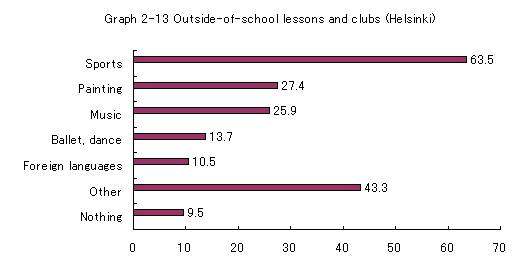
Graph 2-13 Outside-of-school lessons and clubs (Helsinki)
*1: Multiple responses.
*2: In Finnish the word for “outside-of-school lessons�Eis the same as the word for “hobbies.�EThus it is possible that students broadly interpreted and answered the question including activities they engage in as hobbies.
*3: In Helsinki there are very few outside-of-school activities provided by private institutions. Many of such activities are programs organized in local areas or by government, public or religious organizations and they are free of charge.
Since in Helsinki there are virtually no institutions equivalent to the kind of study schools found in the three Asian cities students were asked whether or not they “participate in optional study circles and clubs.�ETwenty-one (21.1) % of students participate in such activities (Graph 2-12).
“Sports�E(63.5%) is the most popular outside-of-school activity, followed by “painting�E(27.4%), and “music�E(25.9%). There are only 9.5% of students who responded that they do “nothing,�Eand thus it can be inferred that many elementary school students participate in some kind of activity (Graph 2-13). However, in Finnish the word for “outside-of-school lessons�Eis the same as the word for “hobbies�Eand this must be kept in mind when making comparisons with other cities.
London
Graph 2-14 Participation in schools for studying other than regular school (London)
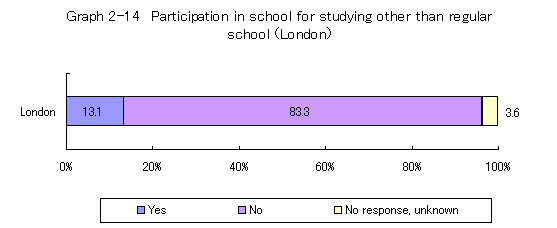
*: Students were asked “Do you attend any study school (private schools for supplementary study)?�Ebr>
Graph 2-15 Outside-of-school lessons and clubs (London)
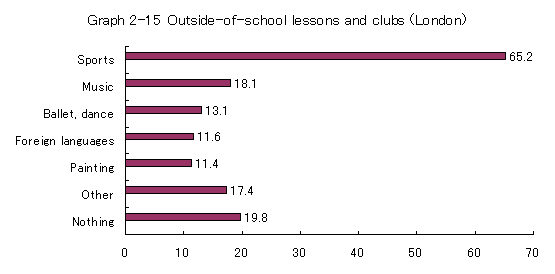
*: Multiple responses.
13.1% of students attend a study school (schools for studying other than regular school) indicate that relatively few elementary school students study outside of regular school (Graph 2-14).
At 65.2%, “sports�Eis the most popular outside-of-school activity, and is far more popular than any other activity. The next most popular activities are “music�E(18.1%) and “ballet, dance�E(13.1%). At 19.8%, the percentage of students who do “nothing�Eis higher than ones in any other city (Graph 2-15).
Washington, D.C.
Graph 2-16 Participation in schools for studying other than regular school (Washington, D.C.)
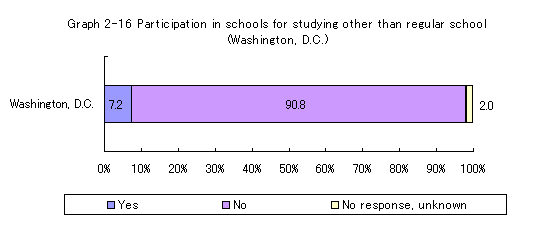
*: Students were asked “Do you attend any study school (private schools for supplementary study)?�Ebr>
Recess at an elementary school in Washington, D.C.
Graph 2-17 Outside-of-school lessons and clubs (Washington, D.C.)
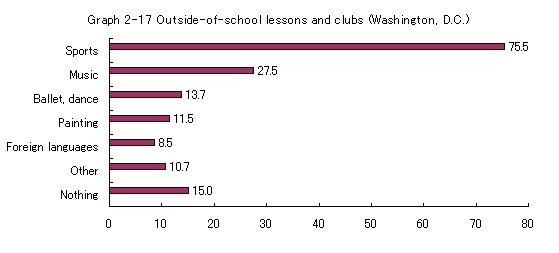
*: Multiple responses.
About 7 percent (7.2%) of students attend a study school (schools for studying other than regular school) indicate that as in London only few elementary school students study outside of regular school (Graph 2-16).
At 75.5% “sports�Eis the most popular outside-of-school activity, with three out of four students participate in some kind of sporting activity. The next most popular activities are “music�E(27.5%) and “ballet, dance�E(13.7%). While the three most popular outside-of-school activities are the same as in London, the percentage of students engaged in such activities is higher than in London (Graph 2-17).
|